
As temperatures drop across Pune—from the open tech corridors of Hinjawadi and Wakad to the residential pockets of Pimple Saudagar, Baner, and Aundh—our clinic observes an immediate seasonal shift: a sharp rise in patients presenting with morning knee stiffness, aggravated sciatic nerve flares, frozen shoulder restriction, and nagging lower back spasms. In classical Ayurveda, winter is not merely a change on the calendar; it marks the transition through Hemanta Ritu (early winter) and Shishira Ritu (late winter into early 2027). Paradoxically, while winter is the most common trigger for musculoskeletal aches, it is also classically recognized as the single most potent season of the entire year for biological strengthening, tissue nourishment, and transformative Panchakarma detoxification.
🚨 Experiencing winter joint pain or planning an annual health reset?
Consult Senior Physician Dr. Tejasvi Mulik (BAMS) at our single Pimple Saudagar clinic. A 45-minute comprehensive pulse diagnosis and scan assessment is ₹500.
"शीते शीतानिलस्पर्शसंरुद्धो बलिनां बली । पक्ता भवति विष्टब्धः प्रवृद्धो हिमसंश्रयात् ॥"However, two environmental qualities dominate winter: Sheeta (cold) and Ruksha (dryness). In the human body, Vata dosha naturally embodies these exact same attributes. When the external atmosphere mirrors internal Vata, it creates an environmental catalyst for Vata Prakopa (aggravation). If the internal lubricating balance of Kapha—specifically Shleshaka Kapha inside synovial joint capsules—is depleted, joint cartilage dries out, tendons tighten, and the peripheral vascular network constricts.
— In winter, the body's internal heat is prevented from dissipating outward due to the surrounding cold air. This concentrates and strongly amplifies the digestive fire (Jataragni), making bodily strength (Bala) highest during this season.
A sealed ring of black gram dough is constructed over the knee joint, and warm, physician-selected medicated oils (such as Kottakkal Dhanwantharam Taila and Mahanarayana Taila) are pooled continuously for 40–45 minutes. The steady warmth liquefies stiffness, opens micro-capillaries, and restores lipid nourishment to synovial membranes.
Administering warm herbal oil retention over the lower lumbar spine relaxes deep paraspinal muscle contractures, relieves nerve root compression, and rehydrates intervertebral disc margins contracted by cold weather.
Warm herbal poultices packed with medicated leaves (Nirgundi, Eranda, Arka) or Shashtika Shali medicated rice boiled in milk and Bala root decoction are rhythmically applied across stiff joints to eliminate muscular rigidity and strengthen ligamentous tone.
Performed on an authentic carved medicinal wooden Droni by trained same-gender therapists under doctor supervision. Synchronized strokes stimulate circulation, soothe the nervous system, and prep the body for whole-body herbal Dashamoola steam. Learn why this differs from a spa: Medical Abhyangam vs Spa Massage.
Beneficial Winter Foods for 2026–2027:
What to Avoid in Winter: Cold beverages, refrigerated foods, dry crunchy puffed snacks (which spike Vata), raw cold salads without oil dressing, and fasting during morning hours.
Because the digestive fire is robust, the body easily tolerates Snehapana (internal administration of medicated ghee such as Guggulutiktaka Ghritam), mobilizing fat-soluble toxins from deep tissues into the digestive tract for controlled evacuation through Virechana (therapeutic purgation) or specialized Basti (medicated enema protocols).
Scheduling a 7-day, 14-day, or 21-day clinical Panchakarma program in December 2026 or January/February 2027 resets your metabolism, protects your cartilage from degenerative aging, and prevents the allergic and respiratory disorders that commonly strike when spring arrives.
Explore our complete breakdown of programs and pricing: Panchakarma Cost in Pune & Treatment Breakdown →
In classical Ayurvedic medicine, winter is dominated by cold (Sheeta) and dry (Ruksha) environmental qualities, which directly aggravate Vata dosha—the bio-energy governing movement and the nervous system. Cold weather causes peripheral vasoconstriction, reducing capillary blood flow to synovial membranes and intervertebral discs. This decreases synovial fluid lubrication (Shleshaka Kapha) in the knee joint and triggers painful muscular spasm in paraspinal muscles.
Classical texts such as the Ashtanga Hridaya describe winter (Hemanta and Shishira Ritu) as the season of maximum biological strength (Bala). Because external cold forces bodily heat inward, our digestive and metabolic fire (Jataragni) burns at its peak. The body can digest, assimilate, and process intensive medicated ghee (Snehapana) and heavy nourishing Rasayanas far more effectively than in the sweltering heat of summer or the humid monsoon.
A standard home massage typically uses generic mustard or coconut oil applied with random strokes. Clinical Medical Abhyangam at Karmanya Ayurveda is a physician-prescribed pharmacological treatment. Based on an in-person pulse diagnosis (Nadi Pariksha), a senior physician selects specific Kerala formulations (such as Dhanwantharam Taila or Mahanarayana Taila), which are warmed and applied along arterial and lymphatic channels on a carved medicinal wooden Droni, followed by herbal Dashamoola steam (Bashpa Sweda) to open micro-channels (Srotas).
For patients suffering from Grade 1, 2, or moderate Grade 3 knee osteoarthritis, Janu Basti is one of the most effective non-surgical therapies available. By retaining warm, medicated herbal oils in a leak-proof herbal dough reservoir over the knee joint for 40 to 45 minutes, it deeply hydrates cartilage, calms subchondral inflammation, and relieves morning crepitus without oral NSAID painkillers.
You can schedule a comprehensive 45-minute consultation with Senior Consulting Physician Dr. Tejasvi Mulik (BAMS) for ₹500 at our single clinic located at 27/11, Swaraj Garden Road, Pimple Saudagar, Pune. Appointments can be reserved online at karmanyaayurveda.com/book-consultation/ or by calling +91 98198 20017. OPD is open 7 days a week from 10:00 AM to 8:00 PM.
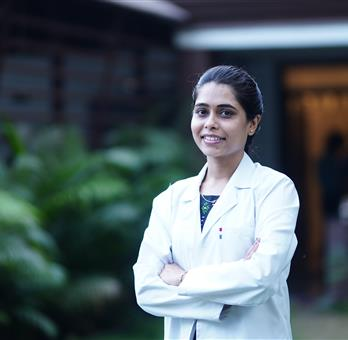
About the Author
Senior Ayurvedic Physician at Karmanya Ayurveda Chikitsalaya, Pimple Saudagar, Pune. Specializing in non-surgical joint rehabilitation, spine care, and authentic Kerala Panchakarma therapies.